
Outdoor living enhancements are easier to justify when they make a yard more useful first and only secondarily support resale. That use-first approach matches current homeowner behavior: the 2026 U.S. Houzz Outdoor Trends Study reported that 83% of renovated outdoor spaces include a lounge or seating area, while 71% include a sofa or lounge chairs Houzz outdoor trends study. RealtyToday also reported that homes upgraded primarily for livability rose to 25% in 2026, up from 22% in 2024, while renovation for resale value dropped to 15% RealtyToday backyard renovation report.
Why Outdoor Living Enhancements Should Start With Use
The most cost-conscious outdoor plan begins with a blunt question: what would make you use the space more often without creating a maintenance burden? A larger project can look appealing on paper, but a simple seating zone, shade strategy, and safe lighting plan may deliver more frequent use at a lower commitment.
That matters because outdoor projects are easy to overscope. Homeowners often start with a patio idea and end up considering utility runs, built-in cooking areas, pergolas, drainage work, and new storage. Some of those pieces can be useful, but each added system raises cost, coordination, and risk. The practical path is to separate daily comfort from wish-list construction.
Comfort Before Scale
Seating is not glamorous, but it is usually the anchor. If the yard has no comfortable place to sit, larger upgrades may not change daily behavior. Start by identifying the best zone for shade, privacy, and access from the house. A movable seating arrangement can help test how the area performs before committing to permanent work.
Lighting deserves the same practical review. Houzz reported that 66% of renovated lounge areas have outdoor lighting to extend evening usability. For homeowners, that does not automatically mean a major lighting system. It means the plan should account for safe movement, task visibility, glare control, and where a qualified electrician is needed.
Cost-Effective Outdoor Living Enhancements That Earn Their Keep
The most reliable cost-effective outdoor living enhancements usually solve a real friction point. A shaded chair grouping can make a hot deck usable. Storage can keep cushions, small tools, and grill accessories from being left out in weather. Better pathway lighting can reduce trip risk and make evening use more practical.
For a similar use-first planning angle, High Pro Tools has covered outdoor living upgrades for daily comfort, including how seating, shade, and lighting often matter more than showy add-ons. That same logic applies here: spend first on the features that change how often the area is used.
Set A Budget Around Everyday Payoff
Budgeting for an outdoor project should not start with the biggest feature you can finance. It should start with a small set of outcomes: sit comfortably, cook safely, move around after dark, store gear, and reduce upkeep. Once those outcomes are ranked, it becomes easier to cut low-use items before they inflate the project.
Real estate value can still be part of the discussion, but it should not be treated as a promise. Cost recovery varies by market, climate, workmanship, buyer expectations, and how well the project fits the house. For readers comparing outdoor projects with local buyer expectations, the related real estate resource from the Jimmy Guthrie Real Estate LLC network can be a useful market-context stop before spending heavily.
Use A Three-Tier Scope
A cautious budget can be divided into three tiers. The first tier is low-disruption comfort: movable seating, freestanding shade, contained storage, and cleanup. The second tier is semi-permanent work: pavers, planter beds, low-voltage planning, or an upgraded grilling zone. The third tier includes higher-risk work such as structural decks, hardwired electrical, gas, plumbing, major drainage changes, and attached roof structures.
That tiered view helps protect the budget because the first tier can reveal whether the layout works before the second or third tier begins. It also gives homeowners an off-ramp. If the seating area proves useful, the next spend may be lighting or shade. If it sits unused, the homeowner has avoided a larger commitment.
| Project Choice | Best Use Case | Risk Boundary |
|---|---|---|
| Movable seating | Testing layout and comfort | Check surface stability and storage needs |
| Shade umbrella or sail planning | Reducing heat and glare | Wind loads and anchoring need caution |
| Path and lounge lighting | Evening use and safer movement | Hire a qualified electrician for hardwired work |
| Storage bench or deck box | Protecting cushions and small gear | Confirm drainage and clearance |
| Built-in kitchen or utility work | Frequent cooking and entertaining | Use licensed trades for gas, plumbing, and electrical |
Where DIY Makes Sense And Where It Does Not
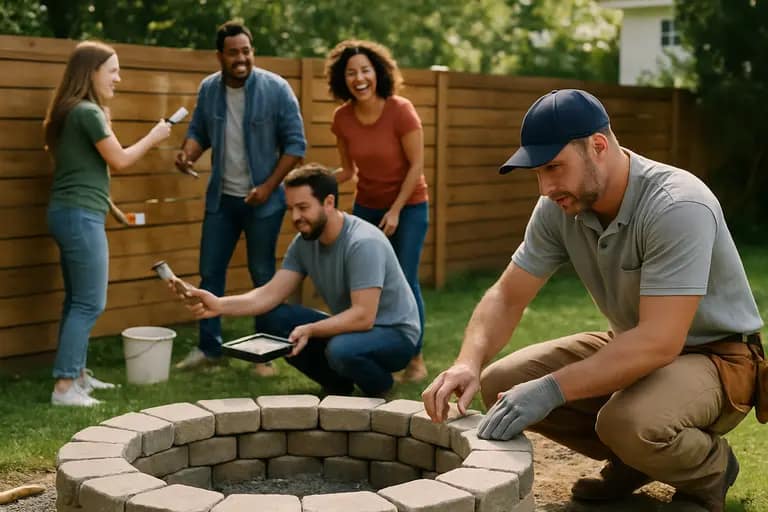
DIY can be a sound way to control costs, especially for planning, cleanup, furniture assembly, container planting, and simple storage. It can also help homeowners learn how sun, wind, water, and traffic patterns affect the yard before hiring anyone. The mistake is treating all outdoor work as weekend-friendly.
Outdoor structures, utility connections, drainage corrections, and elevated surfaces carry higher consequences if done poorly. A deck ledger, stair geometry, guardrail, gas line, exterior receptacle, or buried service line is not a safe place to improvise. Hire qualified professionals for high-risk jobs, confirm permit requirements with the local authority, and keep inspection records with your home files.
Outdoor Living Enhancements And The DIY Line
Outdoor living enhancements that sit on the surface are usually more DIY-friendly than projects tied into the house or utilities. As a rule, if the project can fail without injuring someone, damaging the home, or violating code, a careful homeowner may be able to handle part of it. If failure could create shock, fire, gas leakage, structural collapse, water intrusion, or serious falls, bring in the right trade.
Tool choice follows the same logic. Buy or rent tools based on repeated need, not optimism. A homeowner who will assemble furniture, maintain planters, and adjust storage may benefit from basic cordless tools, clamps, and measuring gear. A one-time masonry, trenching, or structural job may be better served by a professional who already owns the equipment and understands the risk.
Practical Planning Checks
- Start with use patterns: Note where people already sit, walk, cook, and gather before changing the layout.
- Phase the spend: Test furniture placement and shade before committing to fixed construction.
- Protect access: Keep service paths, gates, hose routes, and trash movement in the plan.
- Respect utilities: Do not dig, wire, pipe, or connect fuel systems without proper locating, permits, and qualified help.
- Limit upkeep: Choose finishes, storage, and layouts that match how much maintenance you will realistically do.
Cost-Effective Outdoor Living Enhancements
The best outdoor living enhancements are not always the largest ones. A comfortable seating area, sensible lighting plan, usable shade, and weather-aware storage can make a yard more useful without forcing a full outdoor buildout. That is where investment discipline matters: spend on the changes that remove barriers to daily use, then pause before adding features that need utilities, permits, or major construction.
For homeowners trying to balance enjoyment with resale awareness, the evidence points toward practical comfort rather than project size alone. Use the 2026 trend data as a signal, not a script. If a planned upgrade improves regular use, fits the home, stays within a phased budget, and assigns high-risk work to qualified professionals, it is far more likely to be money well spent.