
The Kobalt battery recall is not a blanket warning about every 24V pack or every Kobalt yard tool. It centers on a specific charging condition: a USB-C-equipped lithium-ion battery can short-circuit when it is charged through that port while still installed in an affected tool, creating a fire hazard. About 554,780 units are covered by the July 9, 2026 recall.
That distinction matters because modern cordless systems increasingly blur the line between battery, charger and tool. Convenience features can change how a pack is handled, just as newer cordless battery technology has changed expectations around power, runtime and charging. Owners need to identify the actual battery and charging method involved rather than assume that voltage alone tells them whether they are affected.
A Charging Convenience Became the Recall’s Main Risk
The recall is unusual because the hazard is not tied simply to the battery being installed in a tool or to normal use in the field. The problem appears under a very specific charging setup, which makes the risk easier to misunderstand. Owners may assume that a familiar USB-C port is just another convenient charging option, but in this case the charging method itself is central to the safety issue.
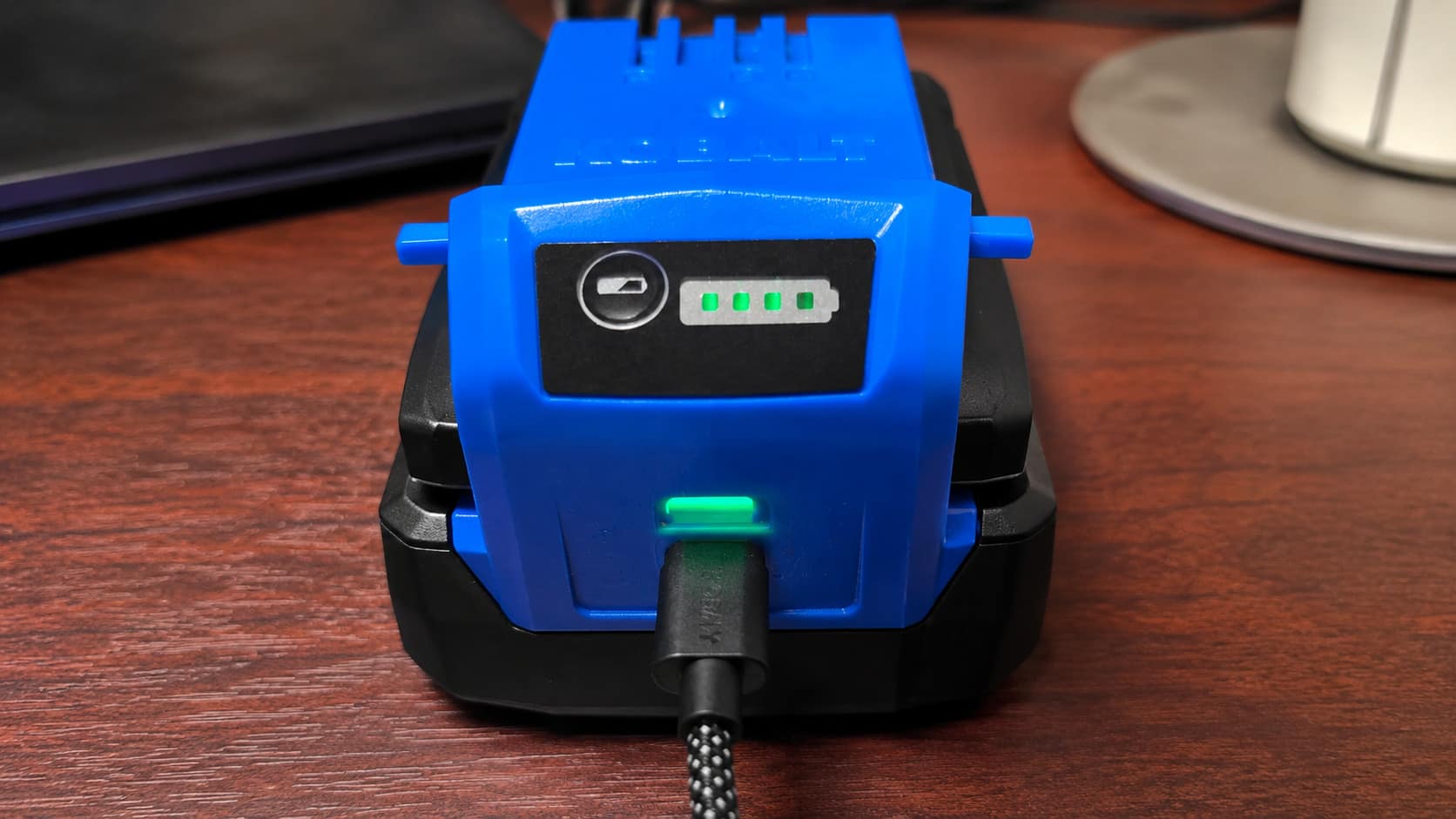
The hazard identified by federal safety regulators occurs when the lithium-ion battery is charged through its USB-C charging port while the battery remains inserted in a recalled yard tool. Under that condition, the battery can short-circuit and create a risk of serious injury from fire. That means the relevant question is not only whether a battery is 24V or 48V, but also how it is being charged and whether it belongs to the affected product group.
Greenworks North America received 34 reports of batteries smoking, sparking or catching fire under that charging condition. No injuries or property damage had been reported in the federal recall notice. The absence of reported injuries is significant, but it should not be interpreted as evidence that affected batteries can remain in normal service.
The practical lesson is narrower than “all Kobalt batteries are dangerous” and more important than simply telling owners to stop using USB-C. The recall covers a defined group of products, a specific battery configuration and an official replacement process. Owners should identify the battery, verify the model and serial information, and follow the recall remedy rather than relying on assumptions about voltage or charging habits.
The Kobalt Battery Recall Is About a Specific Charging Condition
The hazard identified by federal safety regulators occurs when the lithium-ion battery is charged through its USB-C charging port while the battery remains inserted in a recalled yard tool. Under that condition, the battery can short-circuit and create a risk of serious injury from fire.
Greenworks North America received 34 reports of batteries smoking, sparking or catching fire under that charging condition. No injuries or property damage had been reported in the federal notice. That is reassuring on outcomes so far, but it does not reduce the need to act on the recall.
The practical lesson is narrower than “all Kobalt batteries are dangerous” and more important than “just stop using USB-C.” The recall has a defined population of products and a defined replacement process. Owners should verify whether their battery is part of that population.
Check the USB-C Port Before Checking the Tool
The fastest first screening step is physical. The affected batteries are Kobalt-branded 24V packs with USB-C charging capability in 3.0Ah, 4.0Ah, 5.0Ah, 6.0Ah and 8.0Ah capacities. Only products using the USB-C batteries are included, and the 3.0Ah and 6.0Ah versions were also sold separately.
A USB-C port is therefore a strong reason to keep checking, not final proof by itself. The dedicated recall process asks owners to match the product model and enter product and battery serial numbers so eligibility can be confirmed. Current instructions for an affected battery direct owners to stop using it and request a replacement.
The federal recall notice provides the full affected-product list and model numbers. That is more reliable than judging the tool by appearance or assuming an entire voltage platform is included.
Here is the quickest way to organize the check:
| Check | Recall detail | What to do |
|---|---|---|
| Charging feature | USB-C-equipped 24V Kobalt battery | Continue to model and serial verification |
| Battery capacity | 3.0Ah, 4.0Ah, 5.0Ah, 6.0Ah or 8.0Ah | Do not rely on capacity alone |
| Product type | Select mowers, blowers, trimmers, saws and other yard tools | Compare the exact model |
| Sale window | January through May 2026 | Treat timing as another screening clue |
| Remedy | Replacement | Use the official claim process |
The table is a screening tool, not a substitute for model and serial-number validation. A battery can match the voltage and capacity clues without automatically proving that a particular tool-and-pack combination is inside the recall.
The Product List Is Broader Than the Headline Suggests
The recall reaches beyond a single mower or trimmer family. The affected list includes string trimmers, blowers, mowers, chainsaws, pruning saws, a bristle brush, a power cleaner, combo kits, standalone batteries and certain tool-only products associated with the affected system. Products were sold at Lowe’s stores nationwide and online from January through May 2026, with prices ranging from $20 to $482.
That breadth is why checking only the tool name can mislead owners. Some 48V products operate with two 24V batteries, while the recalled batteries themselves are identified as 24V Kobalt packs. A person who remembers buying a “48V mower” may not immediately think a 24V battery notice applies.
The better habit is to inspect the batteries that came with the equipment and then match the exact model information. Voltage labels are not enough to settle recall status.
Replacement Changes the Charging Setup, Not Just the Battery
The remedy is not simply an exchange for an identical pack. Affected consumers can receive a free replacement battery without the USB-C port, along with a charger adapter where applicable, a warning label for the yard tool, an updated manual and a prepaid shipping label for returning the recalled battery.
The replacement claim process asks for the relevant model and serial information plus shipping details. Replacement packages can include batteries without the USB-C port, an adapter where applicable, updated instructions and materials for returning the original battery. The replacement process is provided at no cost.
That package matters because the recall changes the approved charging arrangement. Owners should follow the instructions supplied with the replacement rather than improvise with cables, adapters or old charging habits. Recall guidance also directs users not to alter or disassemble batteries, chargers or adapters and to discontinue use if components show abnormal heat, odor, leakage or damage.
What to Confirm Before the Next Charging Session
For affected owners, the next step is not to experiment with whether removing the pack from the tool makes the old setup “safe enough” for continued ownership. The dedicated recall page currently tells owners to stop using the affected battery and complete the replacement process.
Before the next charging session, confirm four things: whether the battery has USB-C charging capability, whether the tool or standalone pack appears on the affected list, whether the serial numbers qualify, and whether the replacement request has been submitted. Keep the original battery available for the prepaid return instructions rather than discarding it casually.
The Kobalt battery recall is a useful reminder that battery safety is increasingly tied to the whole charging system, not just cell chemistry or pack voltage. Here, a familiar convenience feature creates risk only under a particular configuration, but the official remedy goes further than changing behavior. Owners who match the recalled equipment should verify their serial numbers, stop using the affected battery and complete the replacement so the charging setup itself is corrected.
Frequently asked questions
Are all Kobalt 24V batteries included in the recall?
No. The recall covers specified Kobalt products using 24V lithium-ion batteries with USB-C charging capability. Owners should verify the battery type, product model and serial numbers rather than assuming every Kobalt 24V pack is affected.
Can I keep using an affected battery if I avoid USB-C charging?
No. The current recall instructions tell owners of confirmed affected batteries to stop using them and request a replacement. Avoiding USB-C charging should not be treated as a substitute for completing the official recall remedy.
What comes with the Kobalt battery replacement?
Depending on the affected product, the replacement package can include a battery without the USB-C port, a charger adapter where applicable, a warning label, updated instructions and a prepaid return label.
How do I know if my Kobalt battery qualifies for the recall?
Check whether the pack has USB-C charging capability, then compare the tool or battery model and serial numbers with the official recall information. The recall claim process uses those identifiers to confirm eligibility.
What should I do with the recalled Kobalt battery?
Do not disassemble, modify or casually discard the battery. Follow the recall instructions for returning it using the supplied prepaid shipping materials after your replacement request has been processed.