
Outdoor renovation pros are seeing stronger demand because many exterior projects now combine design, site preparation, drainage, hard surfaces, lighting, appliances, and finish work. From a flooring and surface-performance point of view, this shift is not surprising. Outdoor spaces put materials under moisture, freeze-thaw cycles, soil movement, UV exposure, and traffic patterns that are less forgiving than many interior rooms. The project may look simple on a sketch, but execution often decides whether the finished surface drains correctly, stays level, and remains safe to use.
Mark Stevens has watched this pattern build across remodeling categories: homeowners still want to control scope and spending, but fewer are treating bigger exterior upgrades as weekend-only work. That does not mean every yard refresh needs a full contractor team. It does mean homeowners should sort the work by risk, tools, tolerances, and consequences before deciding what to do themselves. Readers exploring broader home renovation strategies can benefit from considering other project planning resources within the same network.
Why Outdoor Renovation Pros Are Getting More Work
Outdoor Renovation Pros And The DIY Pullback
The most useful data point is not a single outdoor category; it is the wider move away from pure DIY as the dominant model for improvement spending. The Harvard Joint Center for Housing Studies reported that, as of 2023, homeowner spending on professionally installed improvements grew 28% from 2021 to 2023, or 14% after inflation, and professionally installed work accounted for 84.1% of aggregate improvement spending; pure DIY projects declined to 15.9% Harvard housing report.
That spending pattern matters for patios, decks, outdoor kitchens, walkways, and exterior flooring systems because labor quality is closely tied to long-term performance. A paver field depends on base preparation and drainage. A tiled exterior surface depends on the correct setting materials, movement joints, slope, and water management. Composite decking depends on framing condition, fastening systems, clearances, and manufacturer requirements. These are not just appearance issues. Poor decisions can create trip hazards, trapped moisture, premature surface failure, or expensive rework.
Why Exterior Surfaces Raise The Stakes
Interior flooring installers already know that substrate preparation is where many projects succeed or fail. Outdoors, that principle becomes stricter. Soil conditions, runoff, expansion and contraction, and weather exposure all affect the surface. A homeowner may be comfortable painting furniture, assembling planters, or refreshing loose décor, yet still need a qualified installer for stone, porcelain pavers, deck boards, exterior tile, drainage-adjacent work, or stairs.
This is where outdoor renovation pros earn their place. They can evaluate whether the existing base is suitable, whether water is being directed away from the structure, and whether the chosen material fits the site. Homeowners should still ask questions and compare bids, but they should avoid assuming that visible finish work is the whole project.
What The Spending Data Suggests
What The Outdoor Kitchen Data Shows
Outdoor kitchens are a clear example of why professional participation is rising. A 2025 outdoor living trends survey reported that 84% of homeowners who built or upgraded an outdoor kitchen used professional installers for at least part of the work outdoor living trends. That figure is consistent with what many flooring and remodeling specialists see in the field: once a project includes appliances, counters, weather-rated surfaces, utility connections, and permanent structures, the margin for guesswork gets smaller.
The caution is that this data should not be stretched beyond what it says. It does not prove every outdoor project requires the same level of professional involvement. A container garden, freestanding bench, or simple surface cleaning task is not comparable to a built-in kitchen or paver installation. The evidence does support a practical point: as outdoor projects become more permanent and technically involved, homeowners are less likely to handle the whole job alone.
Cost Recovery Is Not The Same As Cost Control
Homeowners often connect outdoor improvements with resale appeal, but cost recovery should not be treated as a promise. No contractor, designer, or installer can promise a sale price based on one patio or deck upgrade. What can be controlled is the quality of the scope, the suitability of materials, and the likelihood that the work will pass ordinary buyer and inspector scrutiny.
For exterior flooring and hard-surface work, cost control often starts with fewer mistakes rather than cheaper labor. Rebuilding a failed base, replacing cracked tile, correcting drainage, or repairing a deck structure can cost more than hiring the right help at the start. That is why bids should be compared on scope, preparation details, product compatibility, warranty language, and schedule assumptions—not just the headline price.
Where Professional Help Makes Practical Sense
Projects With Higher Safety Or Performance Risk
Qualified professionals should be hired for high-risk jobs, especially work involving electrical systems, gas lines, plumbing, structural framing, elevated decks, retaining walls, major drainage changes, or heavy equipment. Homeowners should not rely on short online tutorials for these tasks. Local permitting and inspection rules may also apply, and those requirements vary by jurisdiction.
Flooring-related exterior projects often sit in a middle zone. A ground-level walkway may seem approachable, but base depth, compaction, edging, slope, and runoff still matter. Exterior tile can look similar to interior tile, but the setting environment is different. Natural stone may require careful material selection to reduce slipping, spalling, or staining. If the work affects safety, water movement, or the building envelope, a qualified contractor or specialty installer is the safer choice.
Signs A Bid Deserves A Closer Look
A good professional proposal should describe what is being installed and how the site will be prepared. Vague language can hide future disputes. Homeowners should ask how drainage will be handled, what base materials are included, which products are specified, what exclusions apply, and who is responsible for permits if required. The answer does not need to be dramatic; it needs to be specific enough that both parties understand the same scope.
- Reasonable DIY territory: design inspiration boards, furniture assembly, planting containers, cleanup, simple décor, and routine maintenance.
- Professional territory: structural decks, exterior tile assemblies, paver bases, retaining structures, permanent kitchens, utility connections, and drainage-sensitive grading.
- Shared territory: demolition of non-hazardous items, material shopping, painting small accessories, and site cleanup, if the contractor agrees it will not interfere with the work.
How To Plan A Safer Hybrid Project
Split The Work Before Buying Materials
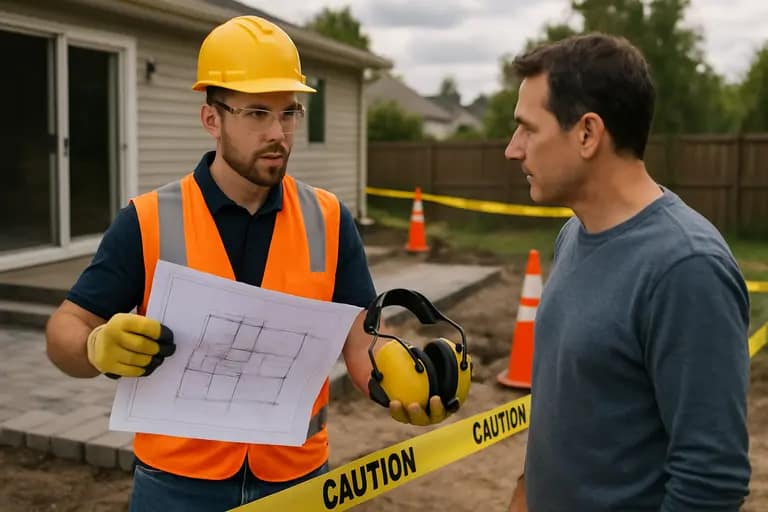
A hybrid project can work well if the division of labor is set early. The common mistake is buying materials first and asking a pro to “make them work” later. That can lead to product incompatibility, missing accessories, unsuitable ratings for exterior use, or warranty problems. Before ordering pavers, deck boards, tile, edging, adhesives, membranes, lighting, or appliances, homeowners should confirm that the installer is willing to use those products and that the products fit the site conditions.
For a deeper planning framework, the hybrid DIY approach is a useful way to separate safe owner tasks from work that benefits from trade skill. The point is not to remove homeowner involvement. It is to put homeowner effort where it reduces cost or improves clarity without increasing technical risk.
Ask Better Questions Before Signing
Homeowners do not need to speak like contractors to protect themselves. They do need to ask direct questions. Who is handling site preparation? What happens if unsuitable soil, rot, or drainage problems are found? Are the materials rated for exterior exposure? Will the finished surface shed water away from the house? What maintenance should be expected after installation? These questions are especially relevant for outdoor flooring, where the surface is only as good as the layers below it.
Documentation also matters. Keep product names, installation instructions, warranty papers, change orders, and maintenance guidance in one folder. If a problem appears later, those records help determine whether the issue is material selection, installation, site movement, or normal wear. Good records do not eliminate risk, but they reduce confusion.
Outdoor Renovation Pros And Project Discipline
The increased use of professional help for exterior renovations should be read as a practical market correction, not a rejection of DIY. Homeowners are still participating, but more are recognizing that permanent outdoor work can involve safety, durability, and water-management decisions that deserve trade experience. The supported data points show professional installation taking a larger share of improvement spending and outdoor kitchens relying heavily on installers for at least part of the job.
For homeowners, the best response is disciplined scope planning. Handle the low-risk work that truly fits your tools and skill level. Bring in qualified professionals for structural, utility-connected, drainage-sensitive, or technically demanding surfaces. Outdoor renovation pros are most valuable when they are hired before avoidable mistakes are built into the project. That approach is less exciting than a fast makeover, but it is more likely to produce an outdoor space that performs well after the first season of use.