
Renovation cost budgeting has become less about finding one perfect estimate and more about building a plan that can absorb price movement, labor pressure, and scope decisions. That does not mean every homeowner should pause work indefinitely. It does mean the first draft of a budget should be treated as a planning model, not a promise.
The cost pressure is measurable. In May 2026, goods used in new residential construction were about 8.3% higher year over year, while core building material prices were up 4.4% year over year, according to HousingWire’s report on NAHB data. Energy also affected the picture, with energy inputs rising 17.2% month over month and diesel fuel prices 105.9% higher year over year in that same report. Those figures do not translate into a uniform increase for every kitchen, bath, deck, or repair, but they help explain why estimates can feel less stable than homeowners expect.
Spending behavior has adjusted. The 2026 U.S. Houzz & Home Study reported that median renovation spend in 2025 was $20,000, while planned spend for 2026 fell to $15,000, according to Houzz renovation trend data. A lower planned spend does not necessarily mean fewer needs. It often means tighter phasing, simpler finish packages, or delaying optional work while keeping repairs moving.
Renovation Cost Budgeting Starts With Current Prices
Use Ranges Before You Use Exact Numbers
Early estimates can be useful, but they should not be mistaken for fixed pricing. Materials, transport, labor availability, and subcontractor schedules can shift between the first conversation and a signed agreement. A cautious homeowner should ask every bidder how long pricing is valid, which allowances are flexible, and which items are likely to change before ordering.
For a practical first pass, divide the project into three groups: required repairs, performance upgrades, and preference-driven design choices. Required repairs might include failing surfaces, moisture-related issues, or worn systems. Performance upgrades may include insulation, ventilation, drainage, or durable replacement materials. Preference-driven choices include finishes, fixtures, color changes, and cosmetic rework. This structure keeps the project from becoming one large wish list with no ranking.
Separate Material Risk From Labor Risk
Material price movement and labor availability are not the same problem. Materials can be affected by commodity pricing, shipping, energy, and supplier inventory. Labor pricing reflects skill level, schedule demand, insurance, supervision, and job difficulty. If a quote is higher than expected, ask the contractor to separate labor, materials, allowances, fees, and subcontracted work so the pressure point is visible.
This is also where homeowners should resist comparing bids only by total price. A low bid with vague allowances can become expensive after change orders. A higher bid with clearer specifications may give the owner a better basis for decisions. For related planning on scope reduction and spending discipline, see this analysis of renovation budget planning.
Build A Budget That Can Absorb Change
Renovation Cost Budgeting Needs A Real Contingency
A contingency is not extra money for upgrades. It is a reserve for conditions that are hard to verify before work begins, such as hidden water damage, outdated framing, concealed plumbing issues, or finish conflicts after demolition. A common planning range is 10% to 20% of the project budget, with the higher end making more sense for older homes, projects opening walls, or work involving structural, electrical, plumbing, roofing, or HVAC systems.
For renters, the same logic applies on a smaller scale. If a landlord permits cosmetic work, the budget should still include patching, repair materials, and possible restoration requirements. Renters should get written permission before making changes and should avoid anything that affects electrical, plumbing, gas, structural elements, or building safety systems.
Protect The Scope Before Choosing Finishes
Many cost overruns begin with finish decisions made before the base scope is priced. Cabinets, tile, flooring, lighting, hardware, and exterior materials can vary widely in installed cost. Before selecting the more expensive option, ask what it does to labor time, substrate requirements, waste, delivery timing, and maintenance. A lower material price is not always a lower installed price if it requires more preparation or specialized labor.
A useful rule is to price the durable core of the project first. That includes weather protection, safe wiring by qualified electricians, sound plumbing by licensed plumbers where required, stable structure, appropriate ventilation, and code-related work. Design choices should sit on top of that foundation, not compete with it. For homeowners exploring design possibilities, they can find project inspiration at J. Siemering Homes while working closely with local professionals to price their own projects.
Compare Contractor Quotes Without Chasing The Lowest Bid
Ask For Itemized, Comparable Bids
Three bids are only useful if they are based on the same scope. Give each contractor the same description, drawings if available, preferred materials, site constraints, access rules, and timing expectations. Ask for allowances to be labeled clearly. If one bid includes permit handling, demolition, disposal, protection of adjacent rooms, and finish installation while another does not, the totals are not directly comparable.
- Confirm what is included: demolition, haul-away, protection, cleanup, permit coordination, and finish installation.
- Identify allowances: fixtures, tile, cabinetry, flooring, hardware, and lighting should have dollar assumptions.
- Ask about exclusions: hidden damage, utility upgrades, structural repairs, and remediation work may be outside the base price.
- Check schedule assumptions: a project delayed by long-lead materials can create extra costs or temporary-living inconvenience.
- Verify credentials: high-risk work should be handled by qualified, insured professionals and permitted where required by local rules.
Use The Interview To Test Communication
A bid is also a communication sample. If the contractor cannot explain why an allowance is set at a certain level, how change orders are approved, or what happens if concealed conditions appear, that uncertainty belongs in the risk column. Good project planning depends on clear decision points before demolition starts.
Homeowners should also avoid asking contractors to cut safety-related steps to meet a target number. Electrical, gas, major plumbing, roofing, load-bearing changes, and work at height can create serious injury and property risks. If those items are part of the project, hiring the right professional is not a luxury line item; it is part of responsible budgeting.
Phase The Project Instead Of Diluting It
Cut Scope In Complete Pieces
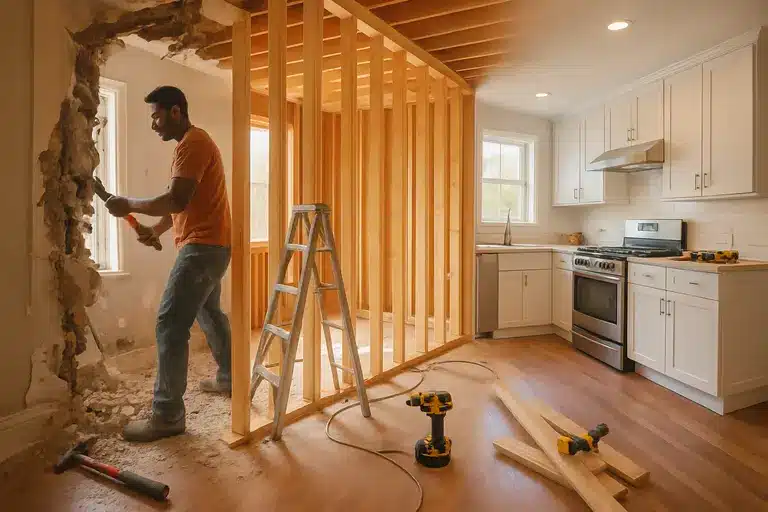
When prices rise, the cleanest savings often come from removing whole portions of work rather than weakening every part of the plan. For example, a homeowner may keep necessary exterior repair and postpone decorative interior upgrades. Or a kitchen plan may keep layout and safety improvements while delaying premium surfaces. Partial cuts should not create rework that costs more later.
Phasing works best when each phase leaves the home safe, usable, and weather-protected. It works poorly when a homeowner starts demolition without the funds to complete functional repairs. Before splitting a project, ask the contractor what sequence avoids duplicate mobilization, repeated inspections, or replacing newly installed materials.
Match DIY Work To Actual Risk
DIY can lower some costs, but not every task is a good candidate. Painting, basic hardware swaps, simple landscaping, and careful cleanup may fit many homeowners. Work involving live electrical systems, gas, major plumbing, structural changes, roof access, or advanced tool use should be left to qualified professionals. The savings from doing risky work yourself can disappear quickly if repairs, medical costs, failed inspections, or water damage follow.
Tool purchases should also be judged against the project, not bought on optimism. If a tool will be used once, rental or hiring a pro may be more practical. If it will support repeated low-risk maintenance, ownership may make sense. Include blades, bits, batteries, protective gear, storage, and learning time in that comparison.
Renovation Cost Budgeting Checklist
Renovation cost budgeting is strongest when it turns uncertainty into decisions. Before signing a contract, homeowners should know the project priority, the current estimate range, the contingency reserve, the bid assumptions, the professional roles, and the conditions that would trigger a pause or scope change.
- Start with required repairs, then rank upgrades and cosmetic preferences.
- Use current material and labor conditions as a reason to refresh old estimates.
- Set a contingency before choosing optional upgrades.
- Compare bids by scope, exclusions, allowances, and schedule assumptions.
- Phase work only when each phase leaves the home safe and functional.
- Hire qualified professionals for electrical, gas, plumbing, structural, roofing, and other high-risk work.
The goal is not to predict every cost perfectly. The goal is to decide what matters most before pressure builds. With a ranked scope, comparable bids, and a protected reserve, homeowners can respond to rising prices without turning a needed project into an open-ended financial strain.