
Home Improvement Trends in 2026 point to a careful kind of confidence. Homeowners are still repairing, renovating, and adapting their houses, but the best decisions now depend less on chasing style and more on matching project scope to age, safety risk, and budget room. As a DIY advocate, I see the strongest plans starting with clear limits: what you can safely handle, what deserves a licensed trade, and what should wait until the house itself is ready.
That caution fits the data. Harvard’s Leading Indicator of Remodeling Activity projected total annual homeowner improvement spending to reach $518 billion by the end of 2026, while growth slowed from about 2.1% in mid-2026 to 1.6% by year-end, according to the Harvard remodeling outlook. In plain terms, remodeling did not stop, but it became less forgiving of weak planning.
What Home Improvement Trends Show For 2026
Home Improvement Trends And Spending Pressure
The most useful signal is not that homeowners are spending. It is that spending discipline matters more. The 2026 Houzz & Home Study surveyed 20,358 U.S. users about renovation work in 2025 and plans for 2026. It reported that 54% renovated in 2025, 52% decorated, and 47% undertook repairs. Median renovation spend held at $20,000 in 2025, while 90th percentile spending rose to $150,000 from $140,000 in 2024. For 2026 plans, 50% expected to renovate, with median planned spend at $15,000, according to the Houzz renovation study.
That combination suggests a split market. Many owners are still active, but planned median spending is lower than the prior year’s median renovation spend. At the high end, larger projects kept getting more expensive. For a typical homeowner, that means a small project should not borrow assumptions from a large remodel, and a large remodel should not be priced with small-project optimism.
Plan Around Scope, Not Just Inspiration
Photos and planning apps can help you see layout options, finish combinations, and rough priorities. They cannot confirm hidden water damage, code issues, structural limits, safe wiring, venting, or whether a wall can be altered. The practical read on Home Improvement Trends is that planning tools are most helpful before you ask for bids, not after you have already committed to a risky scope.
If your project touches electrical panels, gas lines, load-bearing walls, roofing, major plumbing, or high ladder work, hire qualified professionals. DIY work is better reserved for lower-risk tasks such as painting, hardware swaps, simple storage upgrades, basic landscaping, and finish-level repairs that do not expose you to shock, fire, falls, flooding, or structural failure.
Budgets Need A Wider Safety Margin
Use Published Spending Numbers Carefully
Median figures are useful benchmarks, but they are not estimates for your house. A $20,000 median renovation spend does not mean a kitchen, bath, deck, or basement will cost that amount in your market. It only tells you where the middle of reported renovation spending landed among surveyed users. Your project price will still depend on labor availability, materials, demolition findings, permit requirements, access, and how many systems are involved.
I recommend building a simple three-column budget before calling contractors: must-do repairs, function upgrades, and appearance upgrades. Must-do repairs include items that protect the home from further damage or safety problems. Function upgrades improve daily use, such as better lighting placement, accessible storage, or improved ventilation. Appearance upgrades include finishes that can often be changed later if the budget tightens.
Funding Choices Should Not Drive Scope
The Houzz data also showed that savings remained the most common funding source among surveyed homeowners, while credit cards, home equity loans, and proceeds from home sales also appeared in the mix. Those figures describe behavior; they are not advice to finance a project. A homeowner should decide whether the work is necessary, properly scoped, and safely executable before choosing a funding method.
For DIY planning, this is where tool buying deserves restraint. Do not buy a specialty tool because one project video made it look efficient. Rent or borrow for a one-time task if safe and practical, and buy only when repeated use, parts availability, and battery-platform fit justify the cost. For related planning insights, check the article on 2026 remodeling trends by state.
Older Homes Change The Project Order
Condition Comes Before Cosmetic Work
An older house can make a simple project less simple. Even without assigning a single age cutoff, the planning principle is steady: verify the condition of the envelope and major systems before spending heavily on finishes. If a room has staining, poor ventilation, uneven floors, recurring breaker trips, slow drains, or signs of moisture, a finish-first remodel can hide the problem rather than solve it.
That does not mean every older home needs a full professional inspection before paint or shelving. It means you should pause before opening walls, moving fixtures, or installing expensive built-ins over surfaces that may need repair. In high-risk areas, pay for qualified diagnosis early. It is usually cheaper to learn the constraint before demolition than during the most expensive week of a project.
Aging-In-Place Needs Professional Review
Many households are thinking about safer long-term use, especially in bathrooms, entries, stairs, and first-floor living areas. This is one area where the right improvement can be practical rather than cosmetic: better lighting, lower thresholds, safer showers, blocking for future grab bars, and easier circulation can support daily use without making a home feel institutional.
Still, safety upgrades should be designed with care. Grab bars need proper anchoring. Bathroom changes may affect plumbing, waterproofing, and electrical protection. Ramps, step changes, and exterior paths can create drainage or slip issues if poorly built. Bring in qualified remodelers, occupational-therapy-informed design help, or licensed trades where the project affects structure, waterproofing, wiring, or fall risk. For more insights on homeowner priorities in these kinds of projects, you can explore information from J. Siemering Homes, which is a related site in the network.
Smart Planning Is Useful, But Not A Substitute
Where Digital Tools Help
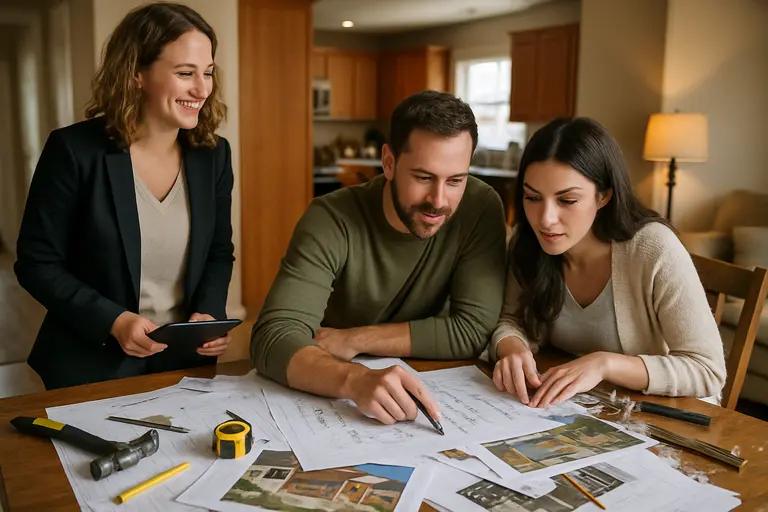
Digital planning tools can be helpful for comparing layouts, organizing measurements, listing materials, and discussing choices with contractors. They can also help homeowners describe a project more clearly, which may reduce vague bidding conversations. For example, a homeowner who can specify cabinet locations, appliance needs, lighting goals, and storage problems will usually get more useful contractor feedback than someone who only says a room feels dated.
Use digital plans as conversation starters, not construction documents unless a qualified professional has prepared or reviewed them for that purpose. A rendering may show a wider opening, a floating vanity, or a cleaner appliance wall, but it does not prove that the wall, plumbing, electrical service, or ventilation path can support the idea.
Where A Licensed Pro Belongs
High-risk work belongs with licensed, insured professionals. That includes electrical service changes, new circuits where required, gas appliance work, structural alterations, roof work, major plumbing changes, and projects requiring permits or inspections. If you are unsure whether a permit is required, ask the local building department or a qualified contractor before work starts.
For homeowners who enjoy DIY, this boundary is not a defeat. It is how you keep control of the parts you can handle while reducing the chance of costly or dangerous errors. You can still contribute through demolition cleanup where safe, painting, trim finishing, product research, punch-list tracking, and maintenance tasks after the professional work is complete.
Home Improvement Trends Action Plan
A Practical Order Of Operations
Use Home Improvement Trends as a planning signal, not a shopping list. Start with the house’s condition, then daily function, then appearance. Write down the problem each project solves. If you cannot state the problem clearly, the project may be a want rather than a priority.
- Rank repairs that prevent damage or safety issues before finish upgrades.
- Set a base budget and a separate reserve for surprises before requesting bids.
- Ask contractors to price the same scope so bids can be compared fairly.
- Keep DIY work away from shock, fire, fall, flood, gas, and structural risks.
- Delay cosmetic upgrades if hidden conditions are still unknown.
The homeowners who fare best in 2026 will likely be the ones who treat remodeling as a sequence of decisions rather than a single purchase. Home Improvement Trends show steady activity, but slower growth and lower planned median spend make precision valuable. A clear scope, a realistic budget, and the right professional help for dangerous work are still the most reliable tools in the kit.