
Outdoor kitchen ROI is easiest to misread when homeowners treat the project like a simple appliance purchase. It is not. An outdoor kitchen combines site work, hardscape, storage, cooking equipment, weather exposure, utilities, and often shade or roof structure. That mix can improve daily use of a yard, but resale recovery depends heavily on climate, design fit, and whether the project is built to a standard buyers trust.
The spending context is real. In 2026, the U.S. outdoor kitchen market is valued at about $10 billion, with expected annual growth of 8–9%, according to outdoor kitchen investment trends. That does not mean every project pays back at resale. It means more homeowners are considering outdoor cooking as part of broader living-space planning, which makes disciplined budgeting more useful, not less.
What Outdoor Kitchen ROI Really Measures
Outdoor Kitchen ROI Starts With Use
Outdoor kitchen ROI should not be reduced to a resale percentage alone. The more practical question is how often the space will be used, how long the homeowner expects to stay, and whether the installation fits the home and neighborhood. A family that cooks outside twice a week in a warm region may justify a larger net cost than a household that uses the grill only a few weekends each year.
The resale side is less precise. The research supplied for this topic places national outdoor kitchen cost recovery estimates around 50–65%, with a mid-range planning benchmark near 55%. That range should be treated as a rough scenario, not a guaranteed return. Local buyer expectations, condition at sale, competing listings, and the quality of the installation can all shift the result.
Separate Enjoyment Value From Resale Value
A useful planning method is to split the project into two columns: expected resale recovery and personal-use value. If a $20,000 project is planned around a 55% recovery assumption, the resale portion would be about $11,000, leaving $9,000 as the lifestyle cost before maintenance. That simple exercise helps homeowners avoid pretending that a comfort project is purely an investment.
That does not make the project unwise. It only clarifies the decision. Many good remodeling choices do not return every dollar at sale. The safer approach is to build at a scale that fits the property, then assume resale value is partial unless local professionals can support a stronger estimate.
Cost Drivers That Shape Outdoor Kitchen ROI
Start With A Credible Cost Range
Outdoor kitchen ROI changes quickly when the starting budget moves. Angi’s 2026 cost data puts the average outdoor kitchen at about $16,533, with most installations ranging from $6,269 to $27,087 depending on size, materials, and features, as shown in its outdoor kitchen cost data. That wide spread is the first warning against using a single resale percentage for every project.
A small grill island on an existing patio has a very different risk profile than a covered cooking area with water, gas, electric service, built-in refrigeration, stone counters, and lighting. The second project may look more permanent and useful to buyers, but it also carries higher installation cost and more points of failure if poorly specified.
Outdoor Kitchen ROI Red Flags
The biggest ROI problems usually show up before construction starts. Overbuilding for the neighborhood, choosing finishes that weather poorly, placing the kitchen too far from the house, or adding features the owners rarely use can all weaken the value case. Prefabricated islands may be appropriate for budget control, but the research indicates permanent, integrated builds are often viewed more favorably than temporary-feeling setups.
- Price the full project, including base preparation, permits, utility work, drainage, lighting, and weather protection.
- Ask whether the design supports normal cooking flow: prep, cooking, serving, seating, trash, and storage.
- Keep total spending in proportion to home value and neighborhood expectations.
- Plan maintenance for counters, cabinets, appliances, covers, and seasonal shutdowns where needed.
Homeowners comparing outdoor upgrades may also find it useful to review how practical outdoor kitchen trends are shifting toward shade, seating, and planned utility zones rather than showy features alone.
Where Climate And Scope Change The Math
Warm Regions Can Support More Use
Climate is one of the strongest factors in the value case. The supplied research indicates that favorable climates, including Sun Belt markets such as Florida, Texas, Arizona, and Southern California, may support stronger resale recovery than colder, short-season markets. That makes sense from a practical standpoint: buyers are more likely to pay for a feature they can use for much of the year.
In colder markets, the same kitchen may still be enjoyable, but it has fewer usable months unless the design includes cover, wind protection, lighting, and safe heating plans. Even then, heating, electrical, gas, and roofed structures add cost and should be designed by qualified professionals. A project that extends use only slightly may not justify a major budget increase.
Permanent Does Not Mean Oversized
There is a difference between building something permanent and building something excessive. A durable counter, weather-rated cabinetry, good drainage, and a safe cooking zone can support value. Oversized islands, duplicate appliances, or elaborate covers may push the project beyond what the home can reasonably absorb. Research supplied for this assignment suggests outdoor kitchens tend to perform best when they remain proportionate to home value; spending far beyond that can create an over-improvement risk.
For those exploring lifestyle properties, rentals, or outdoor-centric living ideas, exploring Weekender Villas provides examples from their network that might spark inspiration. However, it’s critical to filter ideas through local considerations like cost, climate, regulations, and maintenance before making a decision.
DIY Boundaries And Professional Work
Keep High-Risk Trades Out Of Casual DIY
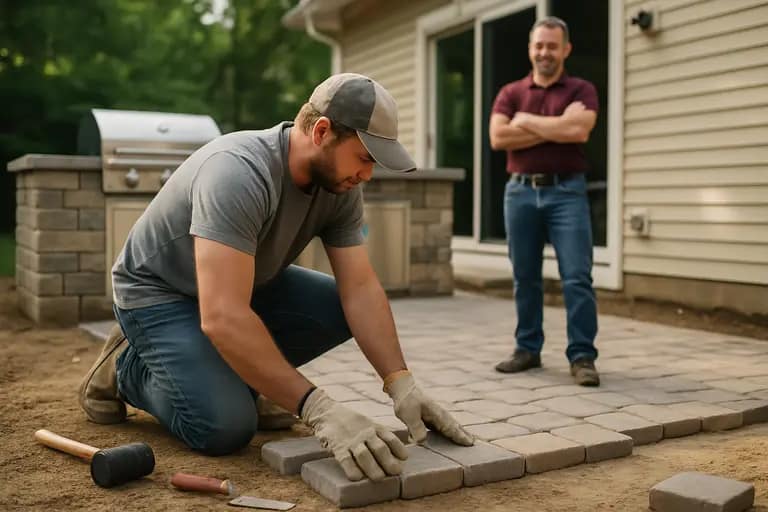
Outdoor kitchens often look approachable because the finished product is visible and simple to understand. The hidden work is where risk rises. Gas lines, electrical circuits, plumbing supply and waste, structural roof posts, masonry bases, drainage changes, and tied-in lighting should be handled by qualified licensed professionals where required. Poor work in those areas can create fire, shock, leak, carbon monoxide, structural, or water-damage risks.
A homeowner can still participate in lower-risk planning tasks: measuring available space, listing cooking habits, comparing appliance sizes, gathering finish samples, or documenting how sun and wind affect the patio during the day. Those steps improve the design conversation without crossing into unsafe installation work.
Use Contractor Bids As Design Tests
Multiple bids are not only price checks. They reveal whether the proposed project has been thought through. A credible contractor should be able to explain base preparation, drainage, utility routing, appliance clearances, ventilation needs, permits, material suitability, and warranty limits. If those details are vague, the quoted price may not reflect the finished cost.
Ask each contractor to separate allowances from fixed costs. Appliances, counters, stone veneer, cabinets, lighting, and shade structures can move the budget sharply. Clear allowances make it easier to compare bids and to cut scope without undermining safety or durability.
Outdoor Kitchen ROI Decisions
A Practical Go Or Pause Test
Before approving an outdoor kitchen, test the project against four questions. Will the household use it often enough to justify the net cost after a conservative resale assumption? Does the design fit the home rather than competing with it? Are utilities, cover, drainage, and materials specified by qualified professionals? Would a smaller project deliver most of the same daily benefit?
If the answers are strong, an outdoor kitchen can be a reasonable outdoor-living investment. If the answers are weak, start smaller: improve the patio surface, add shade, upgrade seating, or replace a failing grill before committing to a built-in kitchen. Outdoor kitchen ROI improves when the project is sized for real use, built safely, and priced with resale recovery treated as partial rather than promised.